The recent IIG Wisdom Wednesday webinar, proudly sponsored by HDI Global SE, challenged attendees to rethink how they view environmental and ESG risk. Presented by Chris Strong, Global Head of ESG Risk Solutions at HDI Global, the session highlighted that environmental liability is no longer a niche insurance discussion. It is a strategic business risk that has the potential to impact balance sheets, reputations, operations and long-term sustainability.

One of the most powerful messages from the webinar was that environmental losses are not limited to the catastrophic pollution events that dominate headlines. Pollution incidents happen every day across the world. Groundwater contamination, soil pollution, wastewater discharge, biodiversity damage, air pollution, and historical pollution exposures can all result in significant clean-up costs, legal liability and regulatory intervention.
In many cases, the reputational damage suffered by a business can be as severe as the financial cost itself.
The discussion also explored how environmental liability and ESG are becoming increasingly interconnected. As businesses strive to become more sustainable, regulators are demanding greater transparency and accountability. New regulatory frameworks are placing a spotlight on environmental impacts, human rights obligations, and governance failures, particularly across global supply chains. 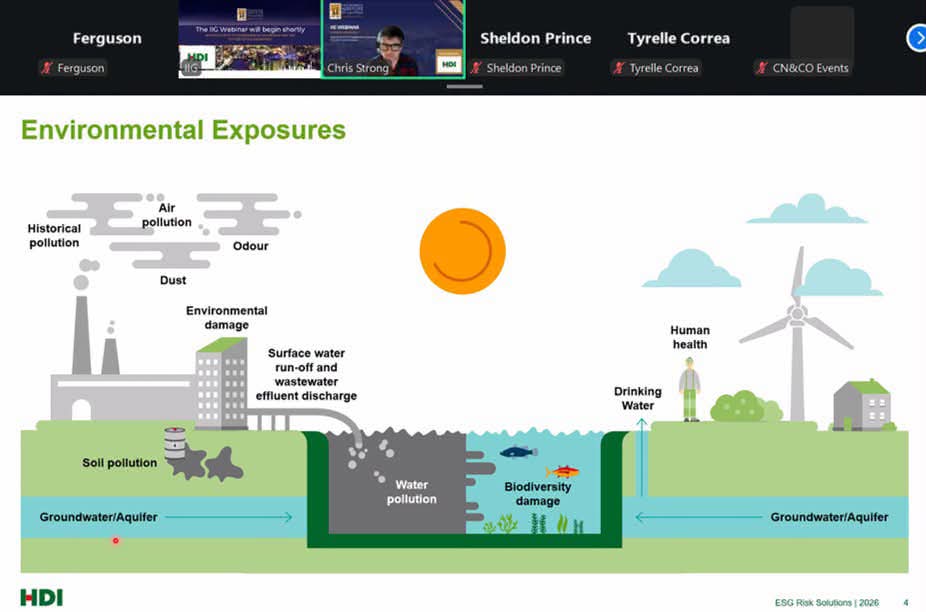
Companies are no longer judged solely on what they do within their own operations, but also on the actions of suppliers, contractors, and business partners.
A particularly insightful section focused on supply chain risk. Even organizations with robust due diligence processes remain exposed to ESG breaches involving issues such as child labor, forced labor, discrimination, biodiversity damage and environmental pollution.
The reality is that due diligence can reduce risk, but it cannot remove risk. When failures occur, businesses can face reputational damage, legal defense costs, regulatory scrutiny, and significant financial losses.
The webinar also demonstrated that traditional insurance policies were never designed to respond adequately to many of these emerging exposures. Climate change litigation, supply chain ESG failures, biodiversity damage and evolving regulatory obligations are creating new protection gaps that require innovative insurance solutions and fresh thinking from risk professionals.
Perhaps the biggest takeaway from the session was that ESG is no longer a tick-box exercise, a compliance discussion, or a future concern. It is a real and growing risk that is increasingly finding its way into boardroom conversations across the globe. Organisations that proactively identify, understand, and manage these exposures will be far better positioned to navigate an increasingly complex risk environment.

The message was simple but powerful: environmental and ESG risks are no longer tomorrow’s challenge. They are today’s reality. The question is not whether these risks will affect businesses, but whether businesses are prepared when they do.

Co-opt Council Education 2026 – Insurance Institute of Gauteng
Strategic Relationship Manager – HDI Global SE