For many years, the insurance conversation has focused on an essential question: what happens when something goes wrong?
Insurance plays a critical role in protecting businesses against financial loss and helping them recover after unexpected events. But in an increasingly interconnected risk environment, protection after an event is only part of the resilience story.
Cyber threats, climate-related events, infrastructure challenges, supply-chain disruption and emerging technologies do not exist in isolation. A single event can affect several parts of a business at once, interrupting operations, placing pressure on cash flow and affecting customer relationships.
This raises a broader and more proactive question: how can businesses connect the dots between their risks, reduce disruption and strengthen resilience before a loss occurs?
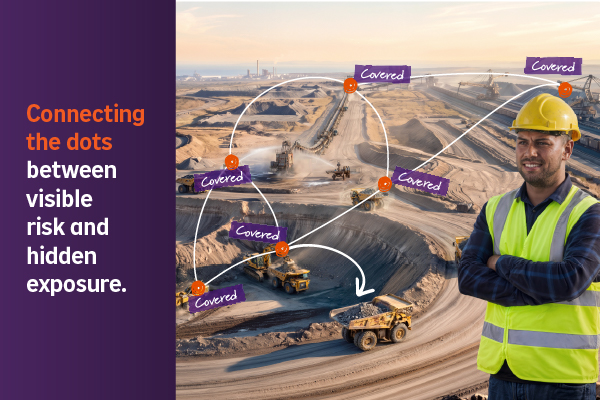
At Hollard, we believe that connecting the dots creates opportunity. Businesses operate as interconnected ecosystems, where people, property, technology, machinery, suppliers and customers all depend on one another. Looking at each risk separately can leave gaps and interdependencies unseen. Looking at the bigger picture helps businesses understand where they may be exposed and where practical action can make them stronger.
That is why effective insurance and proactive risk management should work together. Insurance provides essential financial protection, while a connected understanding of risk helps businesses make better decisions, improve preparedness and reduce the potential impact of disruption.
This also means looking beyond the insurance premium to understand the total cost of risk. That includes insured, uninsured and retained losses, the cost of risk controls, operational interruptions and the wider consequences of an event. By connecting these dots, businesses can make more informed decisions about which risks to prevent, mitigate, retain or transfer.
Risk management is not a once-off exercise. Risks change as businesses grow, adopt new technology, enter new markets and respond to changing operating conditions. Building resilience therefore requires ongoing conversations about emerging risks, business continuity and the practical steps that can strengthen preparedness.
Brokers are central to these conversations. Their understanding of a client’s business, industry and ambitions, combined with insurance expertise and access to specialist insight, helps reveal connections that might otherwise be missed. Their value lies not in being specialists in every field, but in bringing the right knowledge, capabilities and solutions together around the client’s needs.
Hollard’s role is to support this partnership. By connecting brokers’ deep client knowledge with Hollard’s risk insight, claims experience, data and specialist risk solution capabilities, we can help businesses see risk as a connected system rather than a collection of separate challenges. This supports more meaningful protection, stronger preparedness and better-informed decisions.
The future of insurance is not a choice between prevention and protection. Businesses need both, working together to reduce the likelihood of disruption, limit its impact and ensure the right cover remains in place. When businesses, brokers and insurers connect their perspectives and expertise, they gain a clearer view of risk, close potential gaps and make better-informed decisions. Resilience then becomes more than a defence against uncertainty. It becomes a source of confidence, opportunity and sustainable growth.
Together, insurers, brokers and businesses can move beyond simply responding to risk and build a future where resilience creates the confidence to grow.

Head: Risk Management as a Service at Hollard Insure