Insurance has always played an important role in helping people and businesses recover when something goes wrong. We provide financial protection, manage claims and support our clients after they have experienced a loss. This will always remain an important part of what we do.
However, the insurance industry is changing. Technology is giving insurers the opportunity to do more than respond after an incident. It is helping us understand risk earlier, identify patterns in behaviour and, in some cases, prevent an incident before it happens.
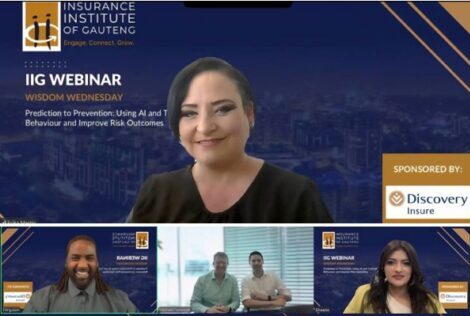
This important move from prediction to prevention was the focus of a recent webinar presented by Michael Rodewijk, Chief Analytics Officer at Discovery Insure. More than 2,000 participants joined the session, which was a fantastic achievement and showed just how relevant this topic is to our insurance community.

The session explored how artificial intelligence, behavioural science and connected technology can be used to encourage safer behaviour and improve risk outcomes. Although many of the examples focused on driving, the lessons can be applied across different areas of insurance.
What stood out for me was that the discussion was not only about technology. It was also about people and how people make decisions.
Technology is most valuable when it helps us understand behaviour and gives people practical support to make safer choices.
This connects strongly with our theme for the year, #AspireTogether. As an insurance community, we achieve more when we learn from one another, share knowledge and remain open to new ideas. Sessions such as this webinar play an important role in our professional development. They help us understand how the industry is changing and how we can prepare ourselves for the future.
One of the main messages from the webinar was that an accident may happen in a moment, but the risk often develops over a much longer period.
Small actions, when repeated regularly, can become habits. A driver may frequently speed, brake harshly, take corners too quickly or use a mobile phone while driving. These actions may not immediately result in an accident, but each one can increase the level of risk over time.
This means that risk often exists long before a claim is reported. By the time an insurer receives a claim, the behaviour that contributed to the incident may already have happened many times.
Technology now gives insurers the ability to identify some of these patterns earlier. Telematics and connected devices can provide information about how, when and under what conditions someone drives. Artificial intelligence can then help analyse this information and identify areas where the biggest risks may exist.
Collecting data, however, is only the starting point. Data on its own does not automatically change behaviour.
Most drivers already know that speeding or using a mobile phone while driving is dangerous. The real challenge is helping people move from knowing what is right to consistently doing what is right.
This difference between knowing and doing was an important part of the webinar. People may understand the risk, but changing a familiar habit can still be difficult. A driver may know that it is safer to slow down, leave a bigger following distance and avoid using a phone, but this knowledge does not always lead to action.
This is where behavioural science becomes important. It helps us understand why people make certain decisions and what may encourage them to make a different choice in the future.
Data can show us what happened. Behavioural science can help us understand why it happened. Artificial intelligence can then help provide advice that is more personal, useful and relevant to the individual.
The webinar highlighted that many technology-based programmes are very good at collecting information. However, they do not always consider human behaviour when deciding how to use that information.
This is an important lesson for our industry. We cannot assume that giving someone a driving score, report or warning will automatically lead to safer behaviour. The message must be clear and easy to understand. It must also be relevant to the person and provide a practical action that can be taken.
Discovery Insure tested this approach through a behavioural study developed with Johns Hopkins University. The study involved 5,000 drivers over four months. Participants received goals over two-week periods, allowing the researchers to compare different coaching methods and understand which approaches worked best.
During the study, the drivers travelled more than 15 million kilometres across approximately 1.7 million trips. Around 23,000 personal goals were created, supported by many notifications and coaching messages.
What interested me most was the personal nature of the programme. The drivers were not all given the same message or asked to achieve the same goal. The coaching was based on each driver’s behaviour, risk patterns and ability to change.
The programme first identified the behaviour that presented the greatest risk. It then considered how often the behaviour took place and whether the driver could realistically change it. A clear and achievable short-term goal was then set.
This approach is important because people can feel overwhelmed when they are asked to change too many things at once. If someone receives a long list of problems, that person may not know where to begin. One simple and practical goal is much easier to understand and work towards.
It also allows the person to see progress. Once one safer habit has been developed, the programme can move to another area that needs attention.
The programme did not only focus on the risky action. It also considered what might be causing the behaviour.
For example, a driver who regularly speeds may not simply be choosing to drive fast. That person may be leaving home late and feeling pressure to arrive at work or a meeting on time. Continually telling the driver to slow down may therefore not deal with the real problem.
A more useful approach may be to encourage better planning or suggest leaving ten minutes earlier. This could reduce the pressure of being late and may also reduce speeding.
This is a simple example, but it shows why personal coaching can be more effective than a general warning. It changes the conversation from only pointing out what went wrong to understanding why it happened and what can be done differently.
The programme also tested different styles of coaching. Some messages were more direct, while others were more supportive. It looked at the value of comparing someone’s driving with other drivers and also tested the usefulness of real-time alerts.
The results showed that the way people are coached can make a difference. Different behaviours may require different types of support. A message that works well for speeding may not have the same effect on mobile phone use, harsh braking or unsafe cornering.
There is therefore no single message or solution that will improve every type of behaviour. The coaching must match the specific risk as well as the person receiving it.
The study produced encouraging results. When compared with a similar group of drivers, mobile phone use reduced by 8.6%, acceleration events reduced by 5.2%, harsh braking reduced by 4.5%, unsafe cornering reduced by 3.9% and speeding reduced by 2.5%.
Some of these percentages may appear small at first. However, when safer behaviour is repeated across thousands of drivers and millions of trips, the combined effect can be significant.
Even a small improvement can make a meaningful difference if it is maintained over time. It may reduce the number of accidents, injuries and insurance claims. More importantly, it may help protect lives.
The lessons from the study helped shape Discovery Insure’s Advanced Driving Instructor. The programme uses technology to identify driving patterns, select an important behaviour and set a realistic goal.
The driver then receives personal guidance and feedback. The behaviour is reviewed again, and the coaching changes as the person’s driving habits change.
This creates an ongoing process. It is not about sending one notification and expecting someone to change permanently. Lasting behaviour change requires regular support, useful feedback and encouragement.
Another important point from the webinar was that safer driving starts before the driver enters the vehicle.
A person’s level of sleep, stress and time pressure can affect decision-making and reaction time. Someone who is tired, distracted or rushing may take risks that would normally be avoided.
Prevention should therefore not only focus on what happens during a journey. It should also consider the factors that may be influencing the driver before the journey begins.
This is a wider and more human way of understanding risk. It recognises that behaviour can be influenced by daily pressures, habits and personal circumstances. Technology can help identify patterns, but the advice must still make sense in the person’s everyday life.
The results shared during the webinar showed that regular engagement can support longer-term change. People who engaged more often with the programme were more likely to achieve their goals. Many participants also maintained their improved habits after completing a goal.
This reminds us that changing behaviour is usually not a once-off event. It takes time, regular feedback and continued encouragement.
It also suggests that insurers can think differently about customer engagement. Communication should not only happen when a policy starts, at renewal or when a claim takes place. There is an opportunity to create an ongoing relationship that helps clients understand and manage their risks.
This type of approach can benefit everyone. Clients may benefit from safer behaviour, fewer incidents and a greater sense of control over their risks. Insurers may benefit from better risk outcomes and fewer claims. Families and communities may benefit when accidents and injuries are prevented.
It can also change how customers view insurance. Instead of only seeing their insurer as a company that responds after a loss, customers can experience insurance as an active partner that helps them make safer choices.
This presents a valuable opportunity for our industry. Insurance is built on understanding and managing risk. If technology helps us identify risk earlier and communicate with clients in a more useful way, we can provide greater value while still remaining true to the main purpose of insurance.
Technology, however, cannot solve everything on its own. Safer roads require drivers, insurers, government, researchers, vehicle manufacturers and other role players to work together.
Data must also be used responsibly and openly. Customers should understand what information is being collected, how it is being used and how it may benefit them. Their privacy must be protected, and their information must always be treated fairly.
Trust will become even more important as artificial intelligence becomes a bigger part of insurance products and customer experiences. People are more likely to use technology when they understand its purpose and believe that it is being used to help them.
Insurers must therefore find the right balance. We need to use data and technology to improve outcomes while making sure that customers still feel respected and in control. Clear communication will be important. Customers should not feel that technology is being used to watch or punish them. They should understand how it can support them in managing their risks.
The webinar also made me think about what artificial intelligence means for us as insurance professionals.
AI is not only something for technology teams or data scientists. It can influence underwriting, claims, pricing, product development, distribution, risk engineering, marketing and customer service.
We do not all need to become technology experts. However, we need a basic understanding of how these tools work and how they could be used in our own areas of responsibility.
We must also be able to ask practical questions:
Is the information accurate? Is it being used fairly? Does the recommendation make sense? Will the customer understand it? Will it improve the customer’s experience or help reduce risk?
Most importantly, we should remember that behind every piece of data is a person. Every driving score or recorded event represents someone with different habits, pressures and circumstances. Technology should help us provide a more personal service, not make the relationship feel less human.
This is why professional development is so important for our insurance community. Having more than 2,000 participants in the session showed a real willingness to learn and engage with the future of insurance.
That level of participation should be celebrated. It shows that our industry understands the value of continuous learning. It also shows that insurance professionals want access to relevant topics that will help them grow and prepare for changes in the market.
Professional development gives us an opportunity to hear different views, learn from real examples and question the way we have always done things. It helps us remain relevant while protecting the knowledge, relationships and values that make insurance important to society.
None of us has all the answers. Insurers understand risk. Data specialists understand patterns. Behavioural scientists understand how people make decisions. Technology specialists know how to build systems that can operate on a large scale. Customers provide real experience and help us understand whether the solutions are practical.
When these different areas work together, we can create better outcomes.
The future of insurance should not only be about using more technology. It should be about using technology responsibly and practically to solve real problems. Technology should support the relationship between insurers and customers, rather than replace the value of human understanding and personal service.
The move from prediction to prevention does not replace the traditional role of insurance. We will always need to support our clients when losses happen. Instead, it adds another level to our purpose by asking whether we can use our knowledge, information and technology to reduce the chance or seriousness of a loss before it happens.
The webinar reminded us that risk is often created through small actions repeated over time. The positive side is that safer behaviour can also be created through small actions repeated over time.
One better decision may not seem important on its own. However, when that decision becomes a habit, and when that habit is repeated across thousands of people, it can lead to meaningful change.
Artificial intelligence can help us understand behaviour. Connected technology can provide information at the right time. Behavioural science can help us communicate in a way that encourages people to act. However, people must always remain at the centre of the process.
The real value of technology is not simply its ability to predict what might happen. Its real value is its ability to help people make safer choices that could lead to better outcomes.
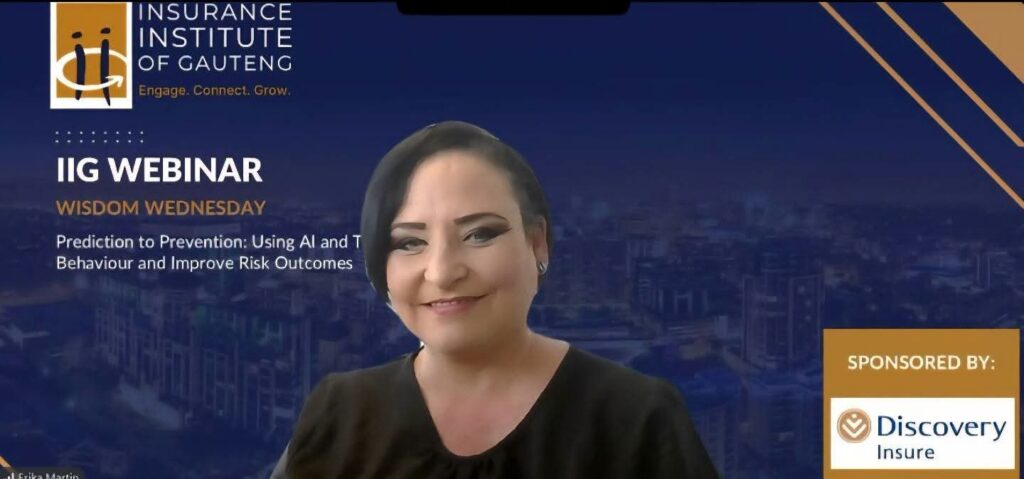
A sincere thank you to Discovery Insure for sponsoring this valuable webinar and sharing its innovative insights with more than 2,000 participants from across our insurance community. By continuing to learn, share and embrace new ideas, we can create safer choices and better outcomes as we #AspireTogether.

Co-opt Council Education 2026 – Insurance Institute of Gauteng
Strategic Relationship Manager – HDI Global SE